
Positive news is a solution to the state of our minds

Photo by Jonathan Robles on Pexels.com

In times like these, it is easy to be caught up in the stress and negativity of the world. Some are pointing fingers at who is to blame for the current frown on our face instead of coming together and find something worth smiling about.

Although the statistics and the advice from experts might be necessary to stay educated about the state of the world, there are good things happening all around us.

Essential workers are out on the frontlines doing amazing things and average people are doing the extraordinary and lending a helping hand. Even in the midst of awful and lonely times, people are finding creative ways to stay connected with friends and family.

These feel-good stories are welcomed on social media and perhaps as important as briefings describing the spread of the virus.

Solutions journalism and positive news story can come together to give people what they want and need: answers and inspiration/hope.

People want to find happiness amidst the hardship, positive news can go a long way. It is also a welcomed break from what seems like the Nothing in The NeverEnding Story.

News organizations have an obligation to spread the news, so features on positive experiences is a great way to keep sharing what is going on in the world, while not continuing to inundate readers with the negativity the pandemic has caused. It is also important in painting the whole picture of what is going on.

Another form of news can come in the form of solutions journalism, which describes the responses taken to address problems. It dives deeper than the typical hard news story and can have an impact on the way people learn and talk about social problems.

Solutionsjournalism.org has a page devoted to pieces about responses to the pandemic. Some are positive and others further explain issues that have emerged because of COVID-19.

All news organizations can include positive news stories and dive into solutions journalism to give people a more well-rounded platform to consume the news. Even though the state of the world has seen better days, it is still turning and positivity can prevail if we spread the good. 

Journalists need to make money too

Photo by Artem Beliaikin on Pexels.com

Just like any other industry, journalism needs to make money, but what are the best ways to do it while maintaining a professional and ethical product?

There really is no one best way to be successful in the journalism industry because what works for a large news organization might not work for independent news outlets or individual journalists.

Bigger organizations can depend on subscribers and their billionaire owners to make enough money to keep the lights on, but local papers and individual journalists might not have that luxury.

Local outlets might find success by being nonprofit and continue to work hard producing important journalism for their community. More than 200 newsrooms are part of the Institute for Nonprofit News including ProPublica, Texas Tribune, Center for Investigative Reporting and many national and local news outlets.

Going nonprofit might be the best decision for smaller organizations just starting out and that need access to resources they may not have the funds for just yet. They also won’t feel the same pressure if a billionaire with an agenda purchases the outlet or having to pay back venture capital or private equity investments.

Another important thing news organizations need to consider to stay afloat is the type of content they produce. 

There is a trend of reporting on niche topics for a specific audience and it might give new journalists a different platform to showcase their work; however, it might take time to make any sort of profit.

A small news outlet that caters to niche content will never overthrow the big organization like The New York Times or Washington Post, but their targeted audience will most likely be loyal and willing to support the work if it’s good. 

Large organizations or other outlets wanting to expand their audience should consider utilizing the technology of today to succeed in the digital age. Emailed newsletters are a great way to start. Some could be free, while others might be a bonus for paid subscriptions and add-ons. 

Podcast shows are also popular and engage a larger audience and outlets can create deals and incentives for paid subscribers, like access to special podcasts or a sneak peek at an episode earlier than the official public release date. 

Whatever method a news organization decides to go with to gain an audience, paid subscribers and hopefully a profit, they must remain ethical in their work. Journalists should not exploit themselves and their work in order to make a quick buck.

How a first responder’s job has changed due to COVID-19, and their advice

While many are staying at home trying to avoid the pandemic, first responders are on the frontlines helping those who were potentially exposed to COVID-19.  

Every day that my dad leaves the house for work, he knows chances are he will come in contact with someone that has COVID-19, but he takes every measure he can to not expose himself, his staff and his family. 

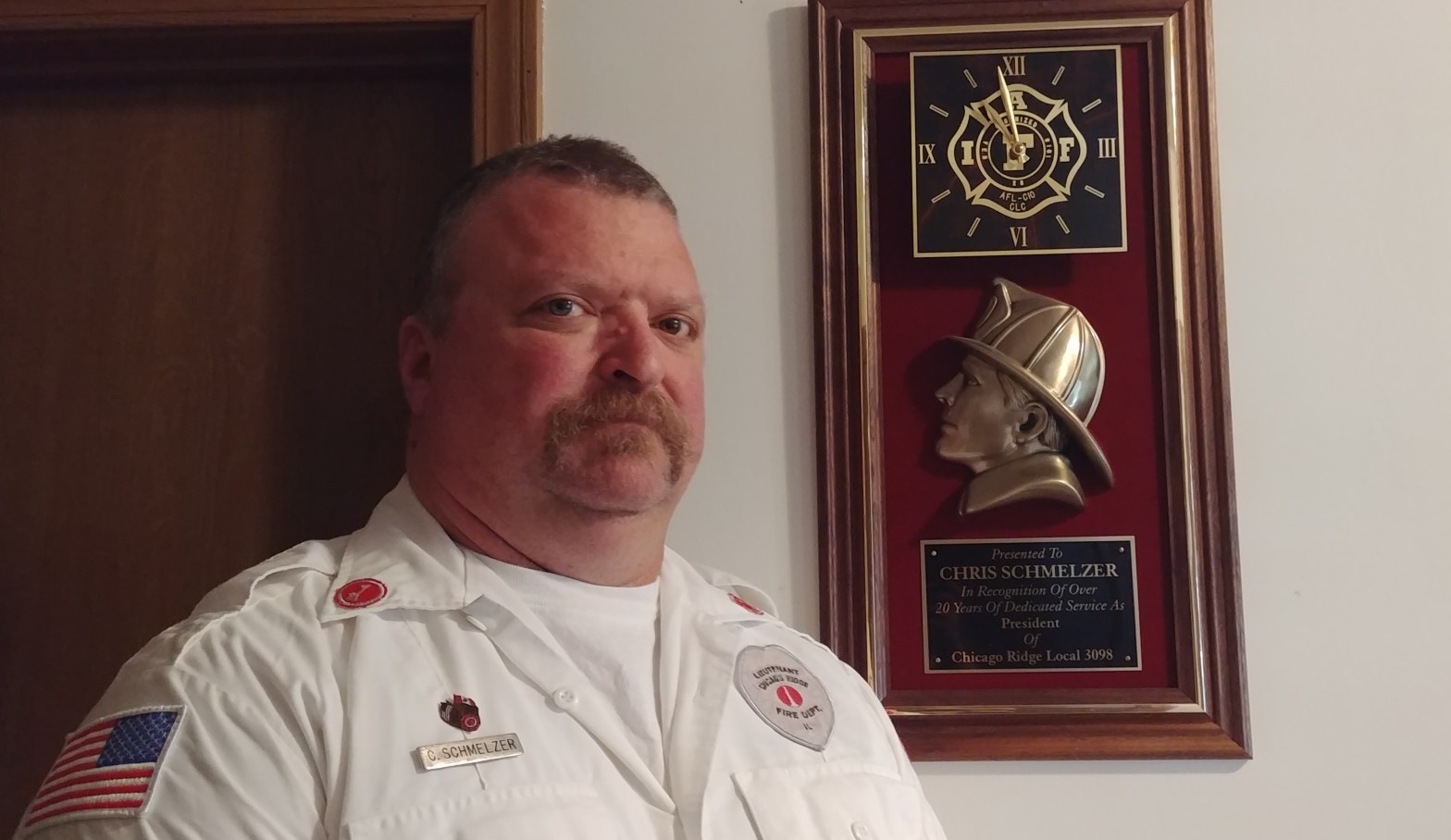
Chris Schmelzer is a Lt. paramedic, the EMS coordinator and designated infection control officer (DICO) for the Chicago Ridge Fire Department. 

If someone has a communicable disease, he must determine if there was an exposure to any staff member and notify those on the call so they’re informed. 

Although he notifies the staff when a patient comes back with a lab-confirmed positive test for COVID-19, he said there has not been a true exposure at his department because the crew has followed the procedures of when to wear personal protective equipment (PPE).

With almost 30 years of experience, Schmelzer shares how the job has changed due to COVID-19. From when he walks in the firehouse and gets his temperatures taken to when he leaves and takes his temperature again, it’s all different. 

How has the pandemic affected your day-to-day work?

Tremendously. Every aspect of the job has changed … We now assess from six feet away and determine whether or not we need to be in the full-blown personal protective equipment, including face shields and mask and gloves and gowns and booties and everything else to protect ourselves from that patient, or if it’s just someone who may have cut their finger with no potential COVID symptoms. 

It’s even dipping into basic fire alarms that aren’t even a medical call because anytime we come in contact with the public, we still have to wear our N-95 masks because you don’t know if that person who was smoking a cigarette in the hallway and set the fire alarm off may also have been exposed to this COVID-19. 

Have these protective measures impacted people’s ability to do the job?

Physically, I would say no, but I’m definitely starting to see the mental strain on a lot of the guys … You see the look on the people that are on the front line ambulances faces when the bell rings and it’s almost a look of dread, where it was never like that before. It was more of mild annoyance, where now you can see they’re actually concerned over what it is they’re going to have to come in contact with.

How are you doing on PPE?

We’re doing okay now. We received a shipment from EMA, the emergency management, and we also received a shipment from our resource hospital, but we were down to about 15 N-95 masks and three isolation gowns before we got that shipment. So, it was really touch-and-go for a while and we’re still having members reuse their N-95s if they haven’t been exposed, if they’re not dirty, just to preserve them so we don’t run out because we really have no idea how long this is going to last.

What would be your advice to people experiencing symptoms of COVID-19? When should they call 911?

You should call 911 if you’re having shortness of breath, chest pain, a cough that doesn’t allow you to catch your breath, and a high fever – and when I say a high fever, 104. If you’re mildly symptomatic – if you have a cough, if you have a temperature of 100-101 – stay home, get rest, drink fluids. That’s what the doctor’s going to tell you if you go to the emergency room. They’re not going to test you; tests are so limited, if you’re well enough to be sent home, you’re not going to get tested. They’re saving the tests for people that are admitted to the hospital. But by all means, if you can’t breathe, at that point nothing else matters, then call an ambulance or find somebody to get you to a hospital. 

Is there anything you would like to add to end this interview?

Always know that your public servants are going to be there as much as they can, and stay healthy.

Should COVID-19 coverage be free?

Photo by Markus Spiske on Pexels.com

Every industry has been affected in at least one way due to the COVID-19 pandemic. News organizations certainly are not alone in having to make difficult decisions. 

What is happening now will surely impact the future of journalism, including what should be free and what will be behind a paywall. 

Many news organizations have made their coronavirus-related coverage free for all by removing their paywall on those articles. This makes sense due to the increase in the number of people reading the news.

Professional organizations are a trusted source of information that can help disprove any false facts appearing on the internet, so by making their coronavirus coverage free, it makes it easier for people to access the truth. These organizations are also hoping that consistent viewers of COVID-19 coverage will turn into paid subscribers.

The Atlantic has seen results that reflect this. In the month of March, the magazine experienced an increase in page viewers and subscribers after it dropped its paywall on a collection of coronavirus coverage. 

This idea is good in theory, but not everyone agrees that making this coverage free will lead to an increase in subscribers. Some might think it is actually bad for business, as there is a decrease in potential advertisers. 

Both ends of the argument make valid points. By removing the paywall, news organizations are allowing people who may not have the funds for news subscriptions the information they may need to get through this pandemic. 

There is a compromise that I see news organizations making as news due to COVID-19 occurs. Coronavirus coverage that should remain free are the articles explaining the data and that consists of information people should be following to keep safe and healthy. 

Other articles that can be described as features on specific people, businesses or events can be put back behind the paywall. These situations may have been impacted by COVID-19, everything has and will continue to be, but they may not be essential for people to know in order to stay informed of the pandemic’s progression. Those interested in these topics may be persuaded to subscribe, even if only for a limited time.

How my local news reports on COVID-19

Illustration via the Patch.

Living in south suburban Chicago, many villages use Patch as their local news outlet. The news organization covers community-specific news and has been looking at the impacts of COVID-19 in suburbia.

The Patch has covered a variety of topics pertaining to the virus. It has reported the numbers in the Alsip-Crestwood area and neighboring communities and what local businesses are opened or closed during this time.

Social distancing has affected everyone, so the Patch, which usually focuses on the people in the community, has looked at the ways residents have overcome the struggles to bring love and support. 

These stories include grandchildren leaving messages of love on their grandmother’s driveway and local high school teachers creating a video for the students they miss in the classroom.

As the Patch usually covers the people and businesses in the community, COVID-19 hasn’t really changed what reporters write, but the focus has become how people are coping and what the community needs to do to get through these times.

The Patch also encourages community members to post directly to the website with any information or questions they have. 

Its Twitter and Facebook accounts include links to articles in the direct community as well as Chicago news, events and weather. This isn’t too much of a shift from the normal, but there is more about COVID-19 and its impact on the communities, which is expected.

Although encouraging community members to share local news and ask questions is a great way for people to interact with the outlet, it could lead to potential misinformation, especially in a time like this when people want as many details as possible.

Overall, I think the Patch has been doing a good job covering the impacts of COVID-19 in the community and taking interesting angles in its features. However, I am more likely to look at Chicago news outlets and national organizations for up-to-date facts and data.

Where to study? Best study locations on Bradley’s campus

Midterms have just wrapped up and finals are not too far away, so now is the time to find the best study place for you.

Bradley University offers many places for students to do their work. There are open spaces and pod-like rooms that provide a study space for everyone. 

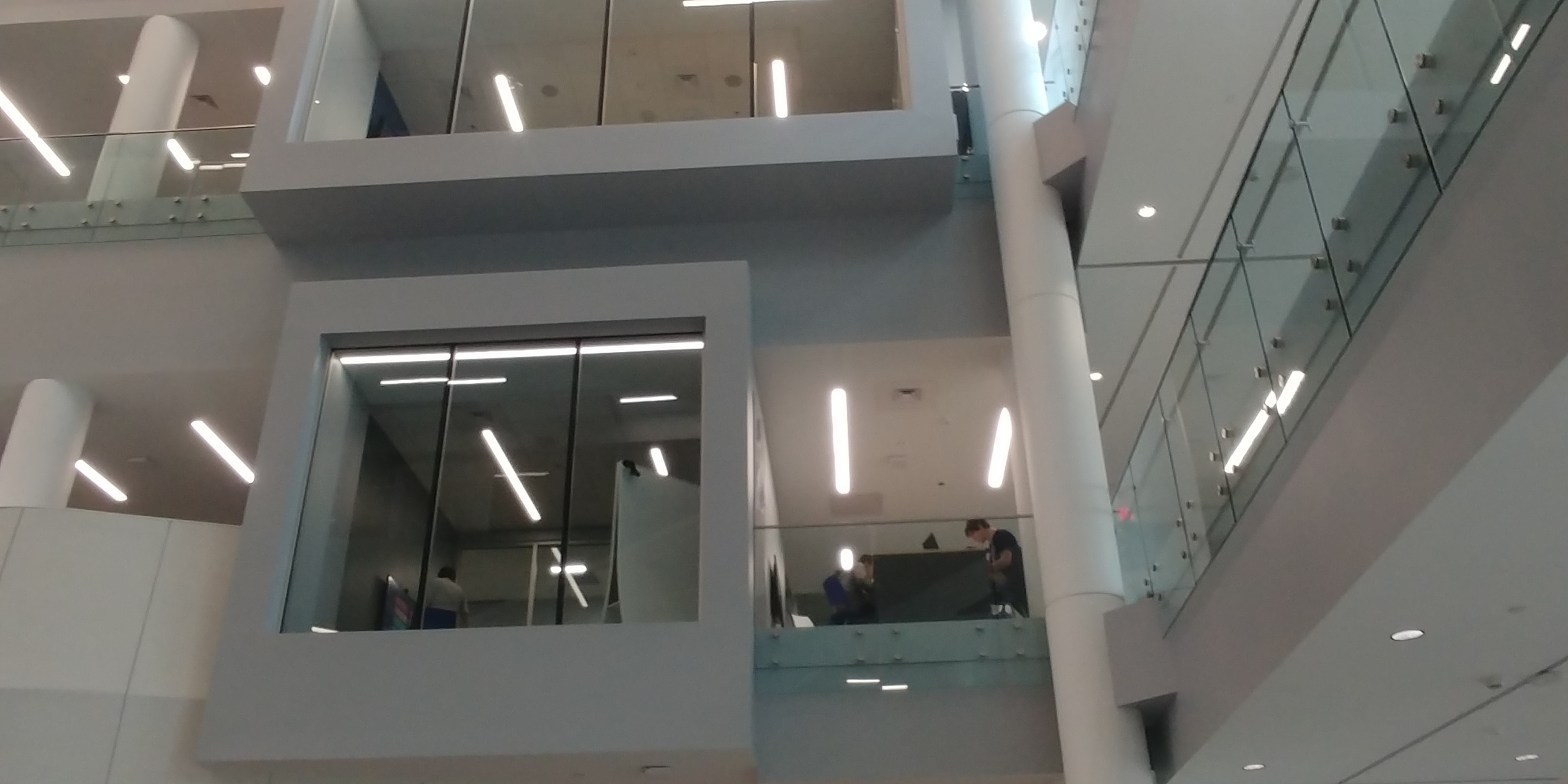
The most popular areas on campus are the first and second floors of the library and the new Business and Engineering Convergence Center (BECC).

The 270,000-square-foot building includes a cafe with Starbucks coffee and refreshers for study fuel. There are common areas on each floor equipped with tables and whiteboards. Each study room also includes a TV. 

Imani Shamsuddin, a sophomore theatre arts major, said she studies in the BECC in a second-floor study room. She goes there once a week for astronomy with a study group.

Taylor Gutt, a freshman industrial engineering major, said she enjoys studying on any floor of the new building and prefers the study rooms, especially when working in groups. When studying by herself, she’ll use the common areas with whiteboards.

Gutt said she likes how the TVs in the study rooms have access to Solstice, a wireless collaboration platform.

“If I’m working on a problem in a textbook and I want to look at the answer key, instead of having it on my laptop … I can just have it displayed in the [TV] screen,” Gutt said.

If she wants to avoid distractions, she’ll just study in her room. 

“In the fall, I was mostly at the library just because it was a little colder and it’s closer to my dorm, but now that the new building is available, I tend to go here more,” Gutt said.

Danielle Macias, a junior health science major, said she likes to study on the second floor of the library, where students can talk but it’s not too loud, or at a back table in the student center. 

She also agrees that the BECC is a study hotspot. 

“The new business building has a lot of nice study areas too,” Marcias said. “I like how you can project onto the TVs.”

She goes to these places when she has to do work on campus, otherwise, she usually studies in her apartment.

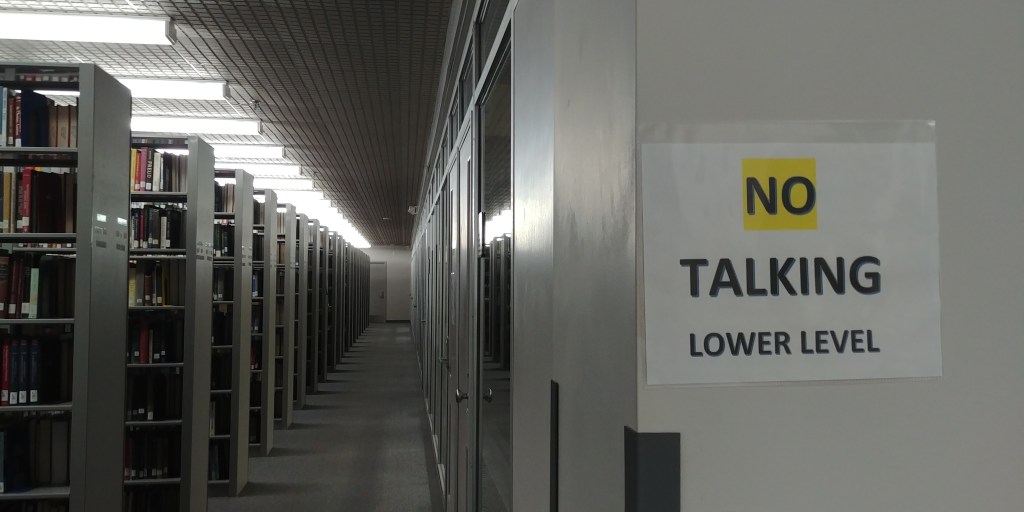
The one place most students agree they will never study at is the basement of the library. They said it was too quiet for their liking and they need at least a little noise to study effectively. 

There is no talking allowed on that floor, so it can seem a little eerie to those that don’t enjoy absolute silence when working.

There is no talking permitted at basement of the library. Photo by Angeline Schmelzer.

Although many students said they don’t like doing work in the basement of the library, a select few students can be seen studying in the void of sound. 

“If the room is dead quiet, my thoughts kind of go elsewhere and I don’t really focus as much,” Gutt said.

Music in audio: chill. by sakura Hz | https://soundcloud.com/sakurahertz
Music promoted by https://www.free-stock-music.com
Creative Commons Attribution 3.0 Unported License
https://creativecommons.org/licenses/by/3.0/deed.en_US

Spreading the news on the spread of coronavirus

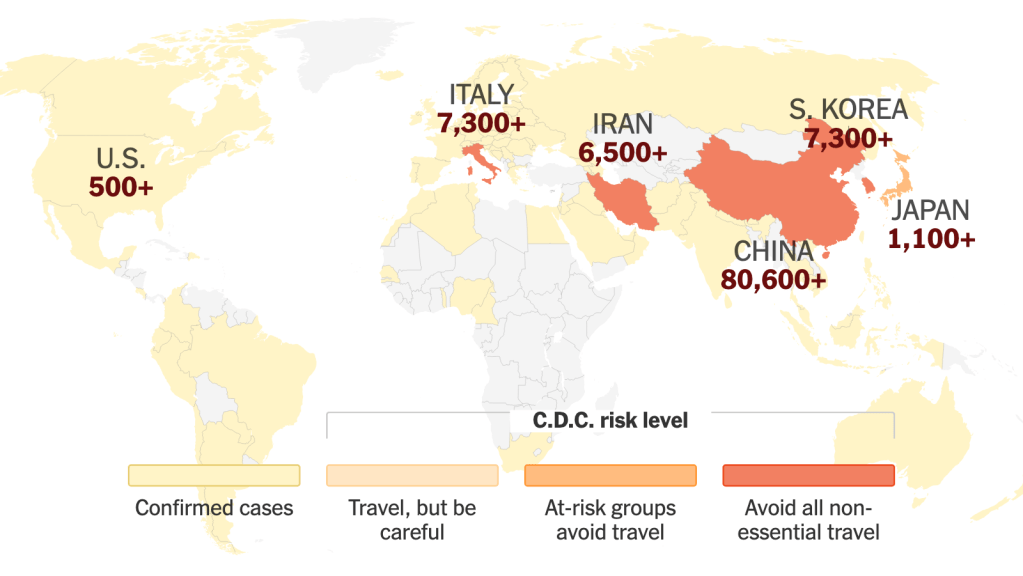
This map illustrates the number of confirmed cases of coronavirus and the CDC risk level as of March 9. Photo via The New York Times.

Coronavirus is practically everywhere, including our newsfeeds.

Many news organizations now have coronavirus-focused material such as newsletters, podcasts and 24-hour updated coverage. Every day there is something new.

The daily briefings about the changes regarding coronavirus are important for the public to discern between fact and fiction. It also helps to know what people should be worried about.

More is being covered than just the fear of getting sick. The news also concerns other things affected by the coronavirus, such as the stock market and travel plans.  

The coronavirus is what most people are talking about, so it makes sense for the media to be covering it.

It is better for trustworthy news organizations to provide real-time information than for people to rely on rumors and misinformation on social media. 

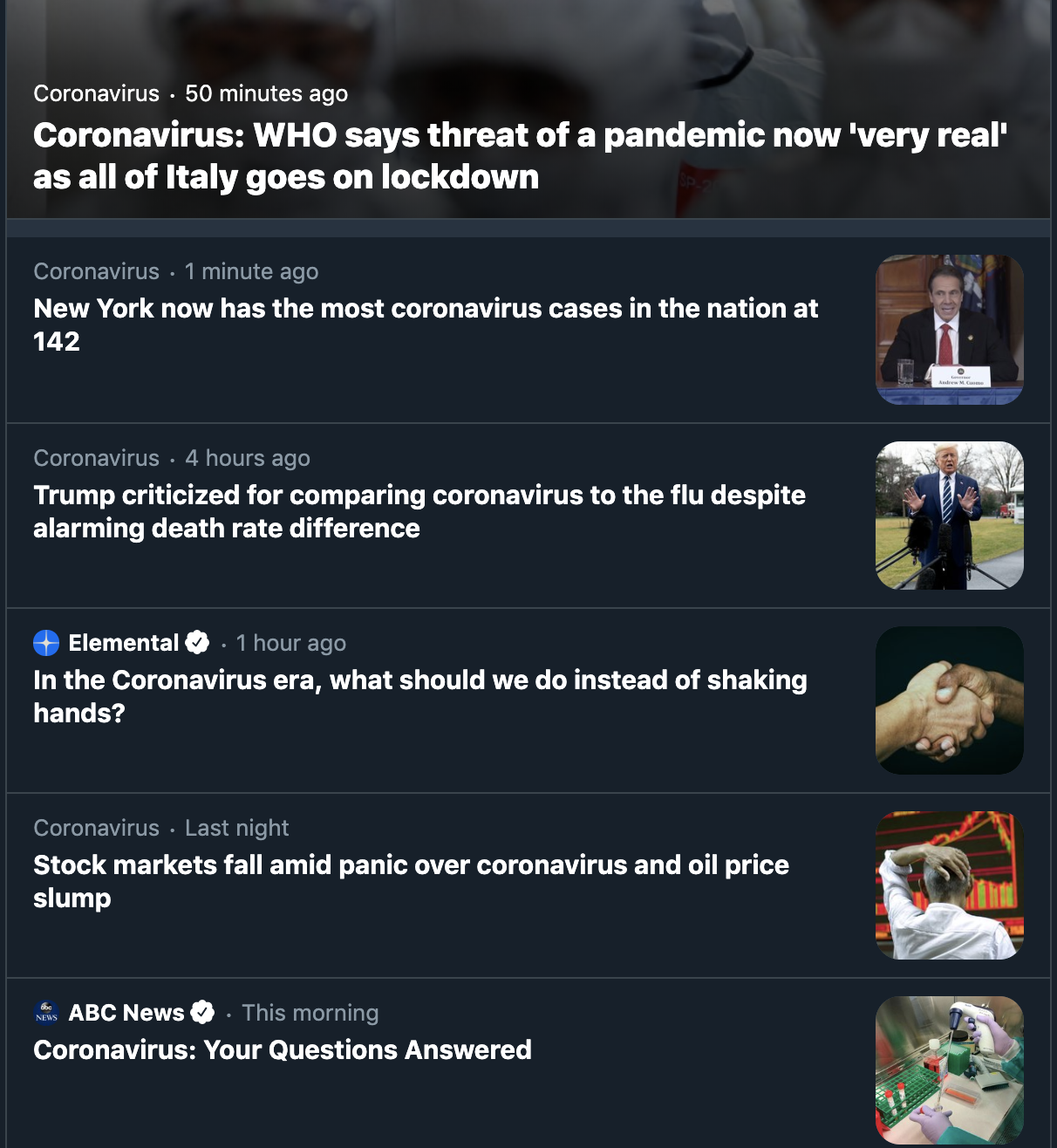
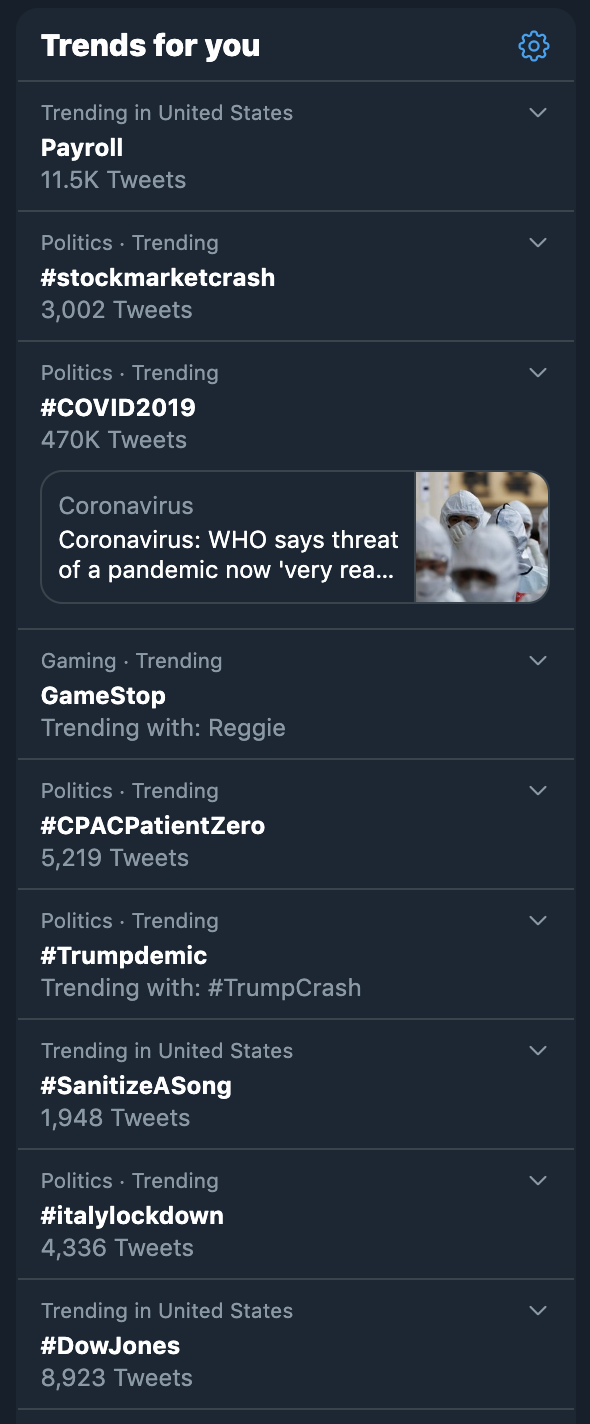
Looking at the “trends for you” and the news tabs of Twitter, I can see that coronavirus-related topics are most, if not all, I see.

Screenshots from my Twitter account.

Although the constant coverage at the beginning of the outbreak may have been frightening, and still might be viewed as annoying, news organizations have been answering questions that might decrease the paranoia.

However, it is still a learning process. There are challenges in covering the coronavirus, which is a constantly evolving situation. One of which being sensationalizing the issue.

Journalists can’t afford to miss anything because so many are searching for the latest information. 

Associated Press journalists started a Slack channel to discuss their coverage on the coronavirus and it has more than 400 members. BuzzFeed News has even started a subtext to share information among the readers that text questions. 

Not sure if the latter is necessary, but I respect the innovative way to receive information on an ever-changing topic.

Although the abundance of information can seem overwhelming and may make people more worried, it is important to stay as updated as possible on a threat to the public’s health.

Out-of-context images lead to misinformation

Who is responsible for minimizing the phenomenon of out-of-context imagery?

We scroll and we scroll, looking for the information we need to go about our daily lives. In most cases, this is probably mindless consumption of memes, videos and inspirational quotes. But when a crisis strikes, we go online for knowledge of the situation.

However, we can’t believe everything we see.

Even though photos tend to increase our belief in what is happening, they can be fabricated or taken completely out of context.

When Iran launched ballistic missiles at military bases in Iraq, where U.S. troops are housed, many false photographs and videos appeared on social media.

It is important to use a critical eye, especially if you’re using social media as your primary mode of consuming news. Many of these photos were taken years ago in completely different situations. Even news organizations are at fault for spreading at least one of the out-of-context images.

When these photos are shared, it creates a heightened sense of controversy and a belief in what is untrue. If this continues, the lack of trust that already exists toward media will continue to grow.

If you are ever in doubt of an image’s authenticity, a simple Google search could show if it has been used before. It is especially important to do this before you share a photo because you want to make sure you are spreading accurate information.

Sometimes it is up to us to take responsibility for confirming the context of photos and videos, but platforms like Facebook and Twitter can make it easier for people to be aware of the truth.

Facebook has initiated a deepfake ban, but some argue the rules are vague and won’t do much to prevent the misinformation spread through out-of-context images.

If Facebook can implement these bans, then it could probably include disclaimers on images and videos that are not being used in the right context. 

Everyone is responsible to minimize the spread of misinformation.

Universities evaluate importance of standardized test scores

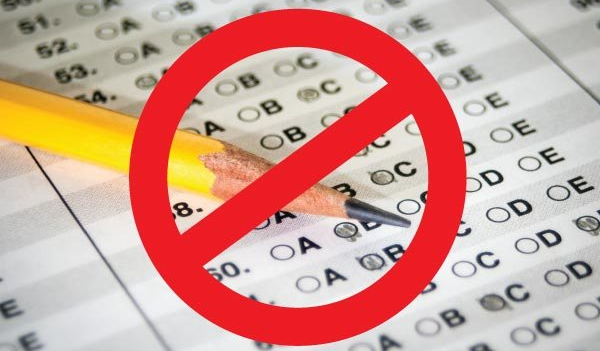
Some colleges have stopped requiring ACT/SAT scores in undergraduate admissions with “test-blind” and “test-optional” policies. Photo via Collegexpress.com

Many colleges and universities are making the shift to deemphasize standardized test scores, but some are eliminating the need to submit them entirely. 

Most recently, Northern Illinois University decided to stop requiring ACT or SAT scores from undergraduate admissions.

High school seniors applying to NIU for the fall 2021 semester will not need to submit standardized test scores and those with a grade point average of 3.0 or above will automatically be accepted.

This “test-blind” policy comes after many schools have decided to adopt “test-optional” undergraduate admissions. This can place more emphasis on GPA and overall student success.

Currently, Bradley University is considering if minimizing the role of standardized test scores is in the university’s future. 

University president Gary Roberts mentioned at a University Senate meeting Feb. 20 that the test-optional admissions may be in the works as part of what he considers a “turnaround agenda.”

“Included in that agenda are some controversial and sometimes risky initiatives, like adopting test-optional admissions,” Roberts said. 

Justin Ball, vice president for enrollment management said Bradley will continue to evaluate test-optional and test-blind admissions, as it has since 2013.

“If these admission options do ever align with [our] institutional mission and goals, we would do a thorough evaluation of the processes and potential outcomes,” Ball said.

Mike Gavic, director of undergraduate admission, said he is in favor of test-optional admissions. He said statistics in recent years have shown that standardized test scores have become less telling of how a student would succeed in a specific program. 

“I think we miss giving some really exceptional students an opportunity to come to Bradley when we over-focus our criteria on test scores,” Gavic said. “Many students I’ve worked with do very well in the classroom while taking Honors or AP level courses, but then something just happens when sitting down for an exam like the SAT/ACT.”

Gavic said many schools have been making the switch to test-optional admissions, many being direct competitors. Although Gavic has concerns if the university could provide any additional resources if needed, he is confident Bradley will make the switch as well.

“There is no doubt in my mind we will move to test-option[al] in the next year or two,” Gavic said. “It truly will give us more opportunity to recruit a larger, more diverse student population without jeopardizing the academic strength of Bradley.”  

News organizations use ad campaigns to gain subscribers

The New York Times advertised “The 1619 Project” during the 2020 Oscars.

Seeing advertisements for products is nothing new, so in the information age, it’s likely we will see commercials for knowledge.

Recently, The New York Times has done just that. They bought a spot during the 2020 Academy Awards broadcast to advertise “The 1619 Project” and entice readers to subscribe with “The truth is worth it” as its message. The ad also featured Janelle Monáe to deliver the message.

This isn’t the first time news organizations have advertised for subscriptions, and it certainly won’t be the last. In today’s age when people want their information to be free, companies must find a creative way for readers to pay for quality journalism.

A solution is for reporters and news organizations to advertise the knowledge they possess, so the public is willing to read and pay for it.

The New York Times first debuted a commercial in 2017 during the Oscars with its “The truth is worth it” campaign.

The organization continued advertising its work by adding “Perseverance,” “Resolve” and “Fearlessness” to the campaign title.

The Washington Post bought a spot during the 2019 Super Bowl to highlight its “Democracy Dies in Darkness” tagline and used Tom Hanks as the narrator.

These commercials tug at the heartstrings, enticing readers to buy a subscription.

When news organizations use these advertisements to promote their journalism, they are spreading awareness and curiosity on topics they deem important. When they buy spots during major events and use familiar faces and voices, they are reaching a large audience.

Even though buying the ad space and using celebrities can increase their chances of gaining subscribers, they are still using a lot of money and resources to advertise their research instead of placing funds to do more investigative work.

Although not everyone who watches these ads are going to subscribe, or even read the story, they are at least aware of the issues highlighted in the ads and will hopefully recognize the important work journalists are doing. 

Design a site like this with WordPress.com
Get started