
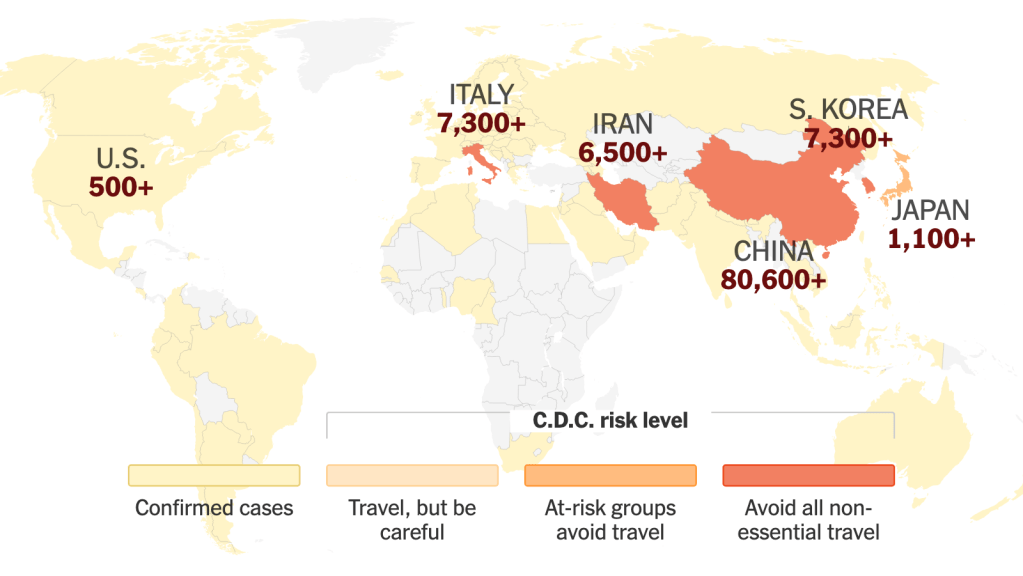
Coronavirus is practically everywhere, including our newsfeeds.
Many news organizations now have coronavirus-focused material such as newsletters, podcasts and 24-hour updated coverage. Every day there is something new.
The daily briefings about the changes regarding coronavirus are important for the public to discern between fact and fiction. It also helps to know what people should be worried about.
More is being covered than just the fear of getting sick. The news also concerns other things affected by the coronavirus, such as the stock market and travel plans.
The coronavirus is what most people are talking about, so it makes sense for the media to be covering it.
It is better for trustworthy news organizations to provide real-time information than for people to rely on rumors and misinformation on social media.
Looking at the “trends for you” and the news tabs of Twitter, I can see that coronavirus-related topics are most, if not all, I see.
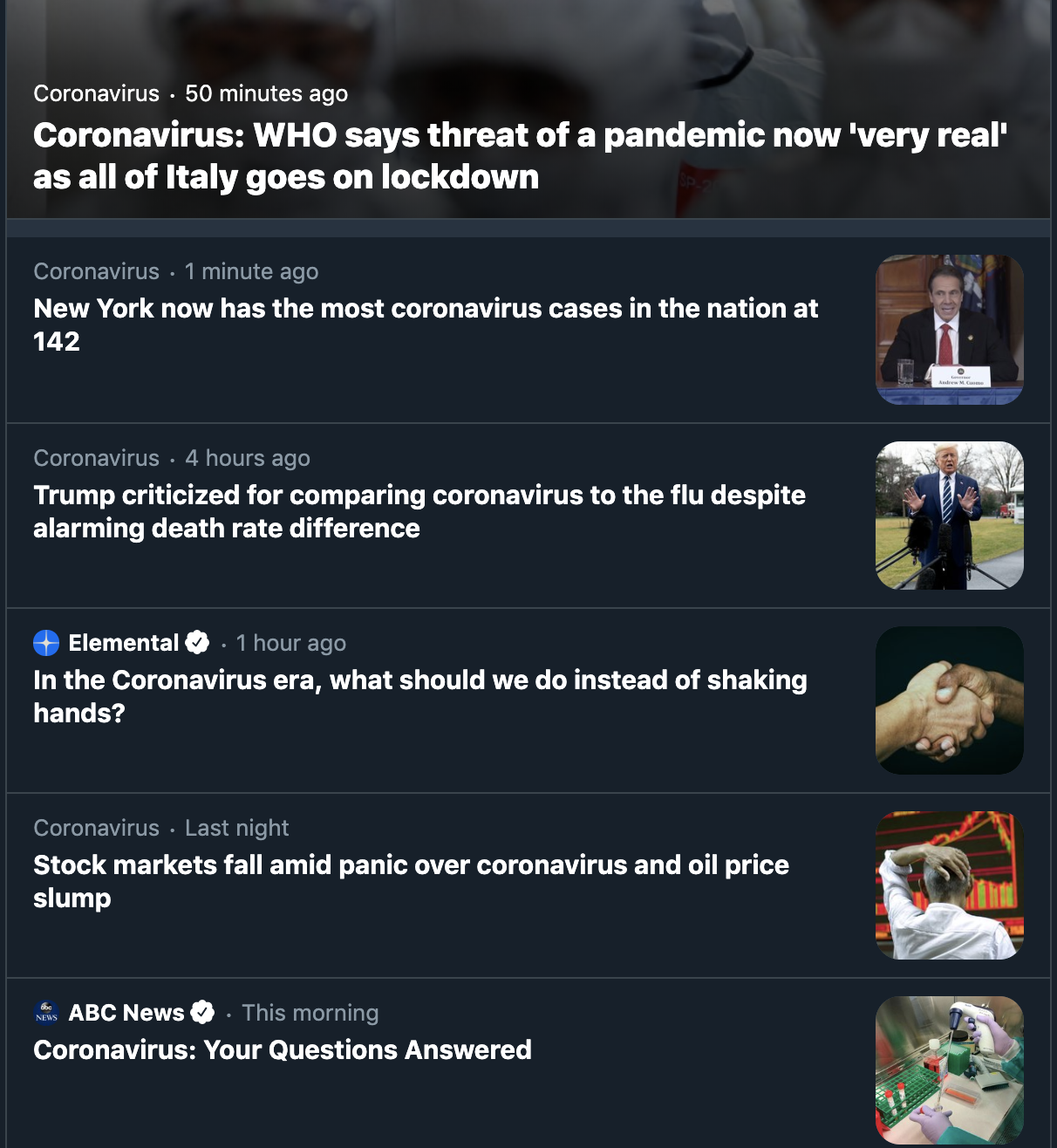
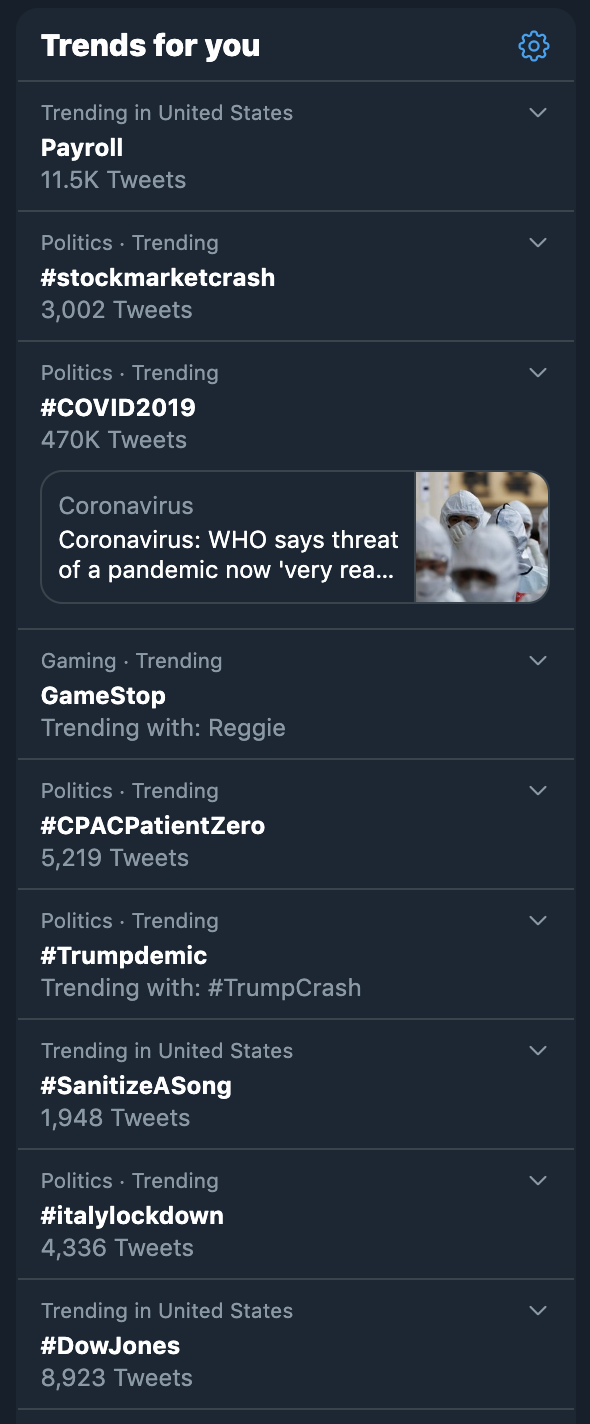
Although the constant coverage at the beginning of the outbreak may have been frightening, and still might be viewed as annoying, news organizations have been answering questions that might decrease the paranoia.
However, it is still a learning process. There are challenges in covering the coronavirus, which is a constantly evolving situation. One of which being sensationalizing the issue.
Journalists can’t afford to miss anything because so many are searching for the latest information.
Associated Press journalists started a Slack channel to discuss their coverage on the coronavirus and it has more than 400 members. BuzzFeed News has even started a subtext to share information among the readers that text questions.
Not sure if the latter is necessary, but I respect the innovative way to receive information on an ever-changing topic.
Although the abundance of information can seem overwhelming and may make people more worried, it is important to stay as updated as possible on a threat to the public’s health.
 Anecdotes by Angeline